ANSI/ISEA Z89.1-2026 was released by ISEA on 11 September 2026 and has been approved by the American National Standards Institute (ANSI).
Industrial head protection is evolving.
ANSI/ISEA Z89.1 has provided the foundation for industrial head protection in the US for decades, defining how helmets are classified and how their protective performance is tested.
Now, the 2026 revision introduces an important evolution to that framework.
Rather than replacing the existing Type I and Type II classifications, the 2026 standard keeps the familiar Type and Class framework and adds optional Type I+ and Type II+ designations. These identify head protection tested beyond the base requirements for retention, chin strap performance and, for Type I+, expanded impact protection.
So, what is changing? And what does it mean for employers, safety professionals and anyone specifying industrial head protection?
The starting point: ANSI/ISEA Z89.1-2014 (R2019)
Before looking at what is changing, it is useful to understand the existing standard.
ANSI/ISEA Z89.1-2014 (R2019) separates industrial head protection into two primary types:
- Type I head protection is designed and tested primarily for impacts to the top of the head.
- Type II extends the protection requirements to impacts from the front, rear and sides, as well as the top, and includes additional off-center penetration requirements.
Helmets can also be classified according to their electrical protection as Class G, Class E or Class C.
These classifications remain important. The 2026 revision does not simply replace them with a completely new system.
Instead, it builds on them.

What changes with ANSI/ISEA Z89.1-2026?
One of the biggest developments is the introduction of the optional “+” designation, creating Type I+ and Type II+ performance designations.
The “+” indicates that the head protection has been tested beyond the base Type I or Type II requirements, giving manufacturers, employers and end users clearer information when matching protection to workplace hazards.
Type I+
Type I+ builds on the existing Type I classification with additional requirements for retention and impacts away from the crown of the helmet.
In addition to the base Type I requirements, Type I+ adds off-center force transmission testing at the front, rear and sides.
A chin strap is required, together with chin strap retention testing and retention system effectiveness testing to assess how securely the helmet remains positioned on the wearer’s head.
Unlike Type II, however, Type I+ does not introduce the same additional off-center penetration protection associated with the Type II classification.
Type II+
Type II already provides a broader impact protection profile than Type I, including lateral impact and penetration requirements.
Type II+ retains Type II impact protection and adds a required chin strap, chin strap retention testing and retention system effectiveness testing.
The distinction matters because Type I+, Type II and Type II+ should not simply be viewed as progressively “better” versions of the same helmet.
They represent different combinations of performance criteria intended for different hazard profiles.
The 2026 revision also adds checks for “+” head protection designed to be worn in reverse. It retains the existing HT and LT environmental markings and renames the High Visibility (HV) marking as Enhanced Visibility (EV), without changing the visibility performance requirement.

Why retention is becoming more important
Impact performance is only part of the head protection equation.
A helmet also needs to be in the correct position when an impact occurs.
In dynamic working environments, workers may be climbing, bending, moving between levels or operating around complex structures. Slips, trips and falls can also create movements that cause inadequately retained head protection to move or come away from the head (often referred to as “roll-off”).
This is why chin straps and retention system effectiveness are an important part of the revised standard.
The change reflects a broader view of protection: not simply how a helmet performs when it is struck, but whether it remains positioned to provide that protection when it is needed.
What does this mean when choosing head protection?
The new designations give safety professionals another tool for matching head protection to the hazards of a particular working environment.
But the fundamental principle does not change.
Head protection should be selected according to the risks workers actually face.
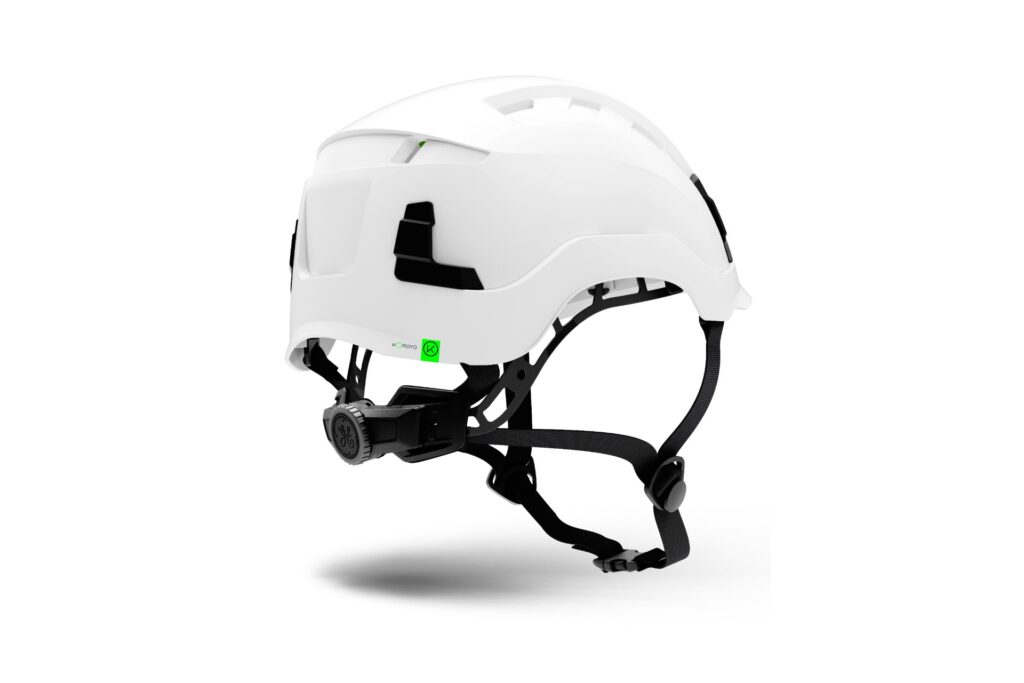
A helmet that visually resembles another product is not necessarily designed, tested or certified to deliver the same performance. This is particularly important as industrial safety helmets increasingly adopt forms influenced by climbing, mountaineering and sports helmets.
Having the same helmet appearance does not mean it has the same performance.
Understanding the standard, the classification and the performance behind the product remains essential.
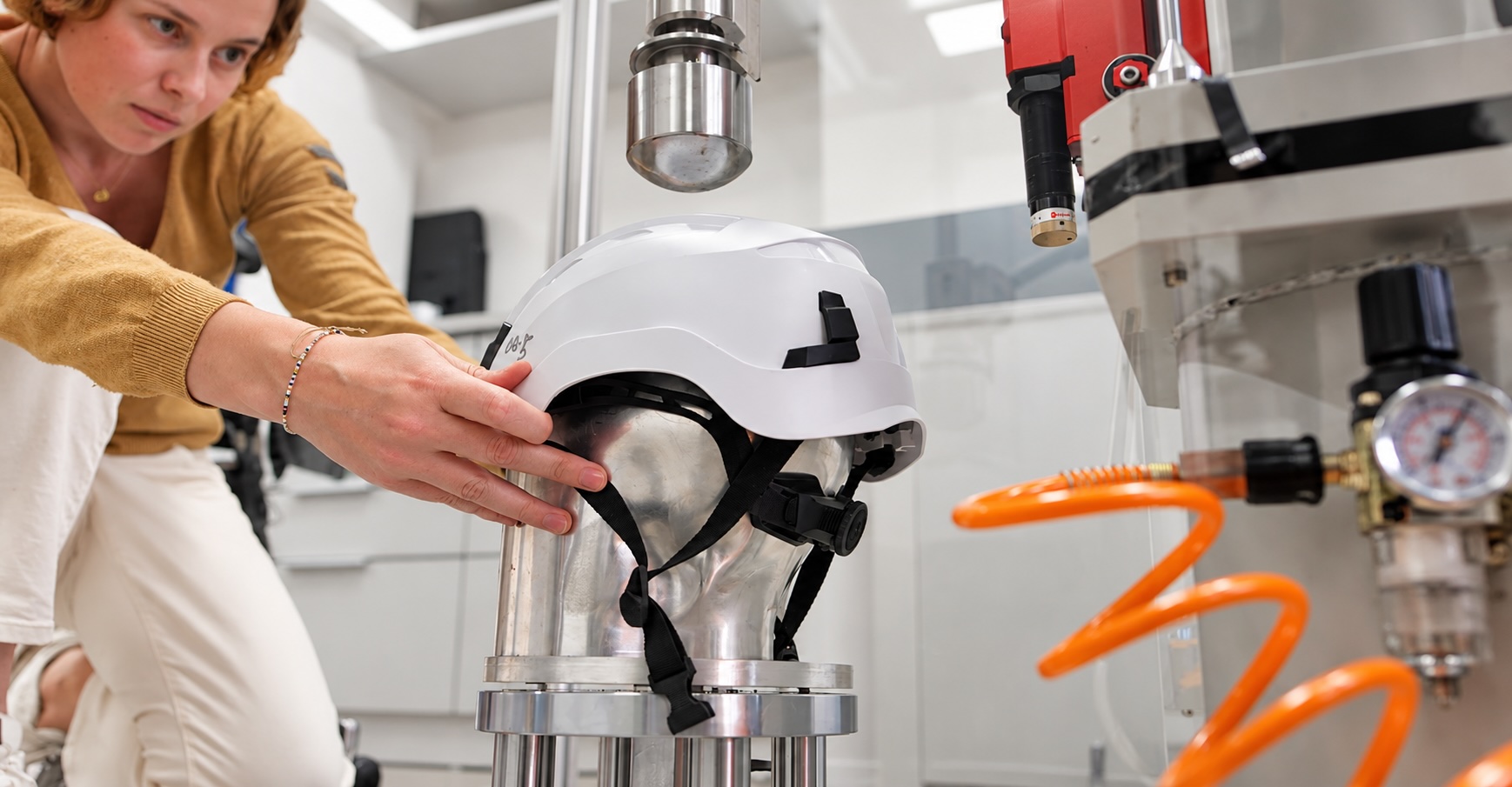
What about rotational motion?
One subject receiving increasing attention across both sports and industrial head protection is rotational motion.
Rotational motion can occur when the head is subjected to certain angled or oblique impacts rather than a purely linear impact.
That distinction is important.
It does not mean rotational motion is being dismissed as a subject. Instead, its inclusion in a standard requires an agreed and repeatable test methodology that can be used consistently across products and testing facilities.
ISEA’s published summary of ANSI/ISEA Z89.1-2026 does not include rotational-motion testing among the requirements introduced in the revision.
Standards also establish defined minimum performance requirements. They do not necessarily represent every area in which helmet technology can continue to develop.
This is where additional technologies can play a role alongside certification requirements.
The distinction should remain clear: rotational motion is an important area of helmet innovation and research, but it is not part of the ANSI/ISEA Z89.1-2026 certification criteria.
Frequently asked questions about ANSI/ISEA Z89.1-2026
Does ANSI/ISEA Z89.1-2026 make older helmets obsolete?
No. The publication of a new edition does not make earlier-certified head protection unusable overnight. What matters is whether the helmet is appropriate for the hazards, meets the requirements that apply to the workplace and is being used as intended.
The 2026 edition adds more ways to specify performance. It expands the framework rather than creating a blanket requirement to replace every existing helmet.
Is the 2026 standard now an OSHA requirement?
Not automatically. As of September 2026, OSHA regulations for general industry and construction still cite the 1997, 2003 and 2009 editions of ANSI Z89.1. They also allow head protection that an employer can demonstrate is at least as effective as protection meeting those referenced standards.
Publication of ANSI/ISEA Z89.1-2026 and a change to OSHA regulation are separate matters. Employers should check the requirements that apply to their workplace rather than assuming the latest ANSI/ISEA edition automatically changes the law.
What should safety teams look at when choosing head protection under the new standard?
Start with the risk, not the shape of the shell or the number of symbols on the label. Consider where impacts could come from, whether penetration is a concern, whether electrical protection is needed, how securely the helmet needs to stay in place, and how it integrates with other PPE.
The new “+” designations give safety teams more performance information to work with. They do not remove the need for a workplace-specific hazard assessment.
Is Type I+ the same as Type II?
No. Type I+ extends Type I with off-center force transmission testing at the front, rear and sides, together with additional chin strap and retention testing. Type II is a different classification with lateral impact and off-center penetration requirements. Type II+ adds the new chin strap and retention requirements to Type II.
The “+” should therefore not be read as a simple ranking. It identifies a defined set of additional tests.
Why does the chin strap matter?
The primary purpose of a chinstrap is stability and to ensure the helmet remains on the head in all manner of challenging conditions including, but not limited to driving site machinery over uneven ground, working in windy or inverted positions.
Because a helmet can only manage an impact if it is still correctly positioned on the head. The “+” designations look beyond impact performance alone by adding requirements for chin strap and helmet retention.
For the wearer, fit and correct use matter too. An unfastened or removed strap cannot provide the retention performance it was tested to deliver.
What does the new EV marking mean?
The visibility requirement has not disappeared. ANSI/ISEA Z89.1-2026 changes the marking from High Visibility (HV) to Enhanced Visibility (EV). ISEA states that the underlying visibility performance requirement is unchanged. The new name helps distinguish helmet visibility from ANSI/ISEA 107, which covers high-visibility safety apparel.
Is a “climbing-style” helmet automatically Type I+ or Type II+?
No. “Climbing-style” describes how a helmet looks, not what standard it meets. EN 12492 was developed for mountaineering helmets, while ANSI/ISEA Z89.1 is an industrial head protection standard with its own impact, penetration, retention and electrical classifications.
Two helmets can look very similar and be certified to different requirements. The markings and certification tell you what has actually been tested.
A broader view of industrial head protection
The evolution of ANSI/ISEA Z89.1 reflects a wider change in the way industrial head protection is being considered.
Protection is moving beyond a single impact direction.
Retention matters. Lateral impacts matter. The way PPE performs while people are moving matters.
And innovation does not stop where a standard ends.
At KOROYD, we believe effective head protection starts by understanding the risks the wearer faces and engineering technologies around those real-world requirements.
With ANSI/ISEA Z89.1-2026 now published, the conversation around industrial head protection has moved forward with it.
The process to update the standard has been a real team effort between the helmet manufacturers, ingredient technology brands and test houses. KOROYD is proud to have been part of that process in driving enhanced safety and protection for the wearer.
Source: International Safety Equipment Association (ISEA), ANSI/ISEA Z89.1-2026 Head Protection Standard. Information in this article has been informed by ISEA materials relating to the 2026 revision of the standard.