In this article, we answer the question:
What is the difference between EU and US industrial helmet safety standards, and how does that affect how safety helmets are developed in those regions?
This is an engineering challenge that KOROYD has deep expertise in solving.
Safety Standard Definitions
EN stands for European Norm (or European Standard).
These standards are developed by European standards organisations such as CEN (European Committee for Standardization).
Examples:
- EN 397 = Industrial safety helmets
- EN 12492 = Mountaineering helmets (widely adopted for work-at-height industrial use)
ANSI stands for American National Standards Institute.
ANSI oversees standards development in the United States across many industries, including PPE and workplace safety.
Example:
- ANSI/ISEA Z89.1 = Industrial head protection standard in North America
(ISEA = International Safety Equipment Association. The ISEA coordinates the views and inputs of safety helmet manufacturers to continually advance personal safety before recommending a revised standard for ANSI to review and for public comment.
Region-Specific Safety Philosophies
A worker climbing a telecom tower in Germany and a worker walking onto a construction site in Texas may appear to be wearing similar helmets – but those helmets could be designed around different testing and performance requirements.
Around the world, industrial helmet standards vary not only in how they test products, but also in what they prioritise protecting against.
Some standards focus heavily on vertical impacts from falling objects. Others place greater emphasis on retention, side impacts, or dynamic movement during falls.
When developing advanced protection systems, this creates a significant engineering challenge.
Designing a helmet for one market is no longer enough. Modern industrial safety products increasingly need to satisfy multiple global standards simultaneously while balancing protection, ventilation, comfort, weight, durability, and worker adoption.
For KOROYD, these evolving standards are not simply compliance targets. They shape how protection systems are engineered from the ground up.

The European Approach: Stability, Retention, and Dynamic Movement
The primary European standards for industrial head protection include:
- EN 397 – Industrial safety helmets
- EN 12492 – Mountaineering helmets widely adopted for work-at-height applications
European standards increasingly reflect the reality that modern workers are mobile, dynamic, and often operating in complex environments.
In the last few years, there has been lots of confusion about which helmet should be worn in the industrial market, particularly when working at height. The confusion arises because both standards have been widely used in the professional and industrial market, while EN12492, by its title, clearly designates a standard for sports applications, and more specifically for mountaineering and alpinism.
This created significant confusion in the European industrial helmet market specifically, with uses for the EN 12492 helmets not always appropriate to the environment and the risk assessment in which the workers were operating versus the legality of providing the correct PPE.
In addition, standards are updated over periods of time by the teams from manufacturers and test houses that suggest revisions to standards, who also review international standards to evaluate what should potentially be read across to their national or regional standard.
Where there is a gap in some standards, this has led to specific clauses from other regional standards being tested and quoted by some brands in the marketplace, which in general is not good practice for public claims.
The national or regional standard remains the critical performance level to meet and certify against, in the case of Europe, at an accredited notified body for the particular PPE category.
Chinstrap Retention Matters
One major difference is chinstrap performance.
Under EN 12492, retention systems are designed to remain secure during falls, dynamic movements, and in case of repeated impacts from pendular falls or multiple falling objects. Linked to the working tasks, and of the working environments, losing a helmet during a fall or after a first impact, could have catastrophic consequences.
And after a complete risk assessment, EN12492 helmets can potentially be determined, in certain cases, as the most appropriate solution, for example in the following sectors:
- Telecoms
- Utilities
- Rope access
- Wind energy
- Rescue
This creates additional engineering demands around:
- Retention system strength
- Fit precision
- Helmet stability
- Long-term comfort
Designers must ensure helmets remain secure without creating discomfort during all-day wear.
Why Global Helmet Standards Differ
Helmet standards are developed around regional working environments, historical injury data, regulatory frameworks, and industry expectations.
That means different regions often prioritise different workplace risks.
European (EN) Standards Focus
- Verticals (Environments): Rope access, Work-at-height, Arboriculture, Rescue operations, Technical climbing environments.
- Risks: Stability, retention, dynamic movement during falls, and side/multi-angle impacts.
North American (ANSI) Standards Focus
- Verticals (Environments): Construction, Oil & Gas, Industrial worksites, Large-scale infrastructure environments.
- Risks: Falling objects (top impact protection), penetration resistance, and electrical hazards.
Both approaches aim to improve worker safety – but they test for different risks in different ways.

A Growing Focus on Side and Multi-Angle Impacts
European industrial safety philosophy has also increasingly recognised that workplace impacts rarely happen perfectly vertically.
Workers may:
- Slip from ladders
- Strike structures laterally
- Swing during falls
- Impact irregular surfaces
As a result, protection systems must increasingly manage:
- Multi-directional forces
- Rotational movement
- Complex impact scenarios
This evolution mirrors broader developments already seen in cycling, snow sports, and motorsport safety.
Now KOROYD is part of the Mips group – with a combined 45 years of experience and tapping into Mips’ deep expertise in rotational forces – we can more significantly accommodate these important factors.
The ANSI Approach: Impact Resistance and Workplace Hazard Protection
In North America, the dominant industrial standard is:- ANSI/ISEA Z89.1
- Multi-directional protection (top impact and off-crown impact)
- Penetration resistance
- Electrical insulation
- Heavy industrial durability
Understanding ANSI Helmet Types
ANSI helmets are divided into categories based on impact coverage.
Type I Helmets
Designed primarily for:
- Top impacts only
Historically, this represented the traditional “hard hat” concept focused on falling object protection.
Type II Helmets
Designed for:
- Top impacts
- Lateral impacts
- Off-centre impacts
Type II helmets have become increasingly important as workplace injury analysis has shown that many serious head injuries involve:
- Slips and falls
- Side impacts
- Movement around structures and machinery
This shift is changing how industrial helmets are designed globally.
Engineering Challenges: Balancing Competing Demands
Meeting either EU or ANSI standards individually is already complex.
Meeting both simultaneously introduces significant engineering conflicts.
The Trade-Offs Behind Helmet Design
| Design Requirement | Engineering Challenge |
|---|---|
| Increased ventilation | Reduces material coverage and available impact absorption areas |
| Lower weight | Reduces structural mass needed to absorb high-energy impact |
| Improved comfort | Increases retention and adjustment systems |
| Higher impact protection | Typically increases helmet bulk, thickness and weight |
| Electrical insulation | Limits ventilation areas, and also dictates material choice |
| Multi-standard certification | Obliges designers and engineers to balance competing standards and to find compromises |
Every design decision affects another performance area.
For example:
- Increasing airflow may compromise coverage
- Adding material may increase weight and reduce comfort
- Stiffer structures can increase the transmitted force during impact
This balancing act is central to modern industrial helmet development.
This is where the performance advantages of KOROYD really add value.
Our approach to helmet design is “Protection Without Compromise.”
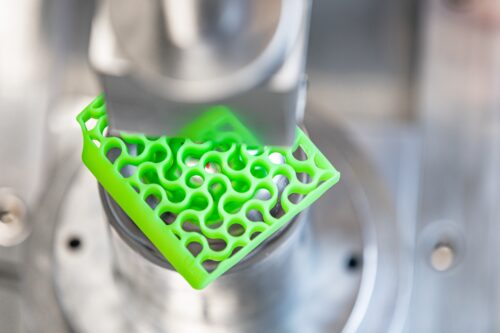
The advanced impact technology is 95% air – open cell and ultralight.
This allows us to engineer sleeker helmets with less bulk and lower heat stress at the same time as improving energy absorption capabilities.
Related reading: Type I vs. Type II Safety Helmets
The ANSI/ISEA Z89.1 standard R2019 is currently under review by ISEA members before being sent out for review and public comments before being formally updated. The timeline remains unclear for publishing, but is currently anticipated in 2026, all being well.
EN vs ANSI FAQs
EN standards focus more on retention, stability, and dynamic movement for work-at-height environments, while ANSI standards traditionally prioritise top-impact protection, penetration resistance, and electrical hazards in industrial workplaces.
EN stands for European Norm, which refers to European safety standards developed by recognised standards organisations.
ANSI stands for the American National Standards Institute, which oversees safety standards used across industries in North America, the Middle East, and in some other specific regions of the world.
Type I helmets are designed primarily for top impacts, while Type II helmets provide protection against both top and side impacts.
Workplace injury data shows many serious head injuries involve lateral or off-centre impacts caused by slips, falls, and movement around structures or machinery.
In work-at-height environments such as telecoms, utilities, and rope access, a secure retention system helps prevent helmets from falling off during dynamic movement or accidents.
Heavy, poorly ventilated helmets can reduce wearer comfort and increase fatigue, making workers less likely to wear protection correctly throughout long shifts.
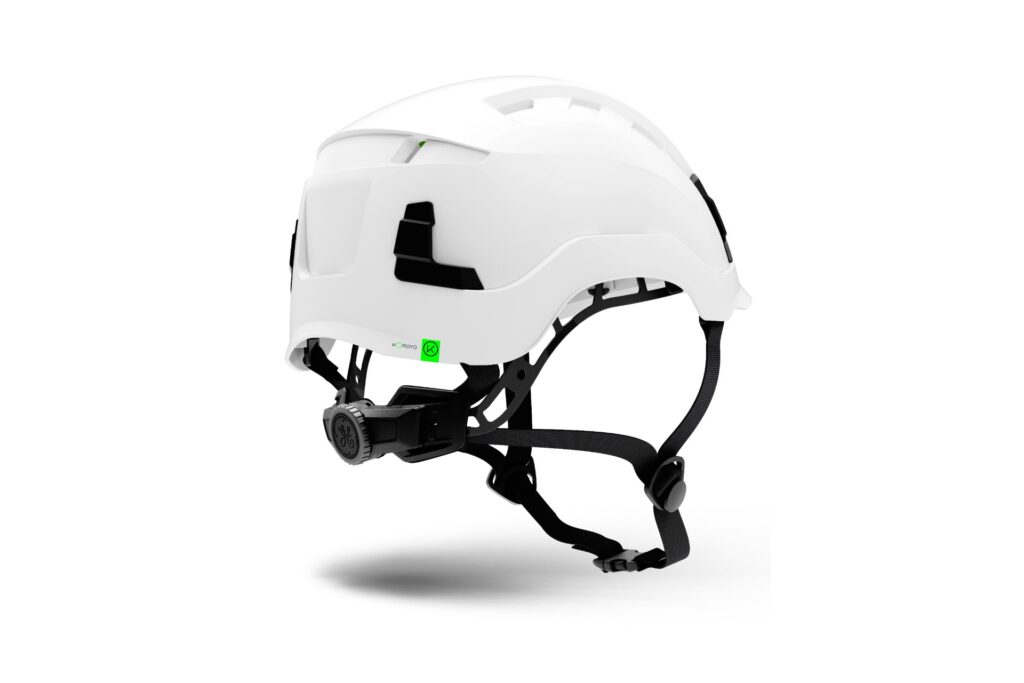
Modern industrial helmets are increasingly adopting climbing-style designs with integrated retention systems, side-impact protection, and advanced energy management technologies.