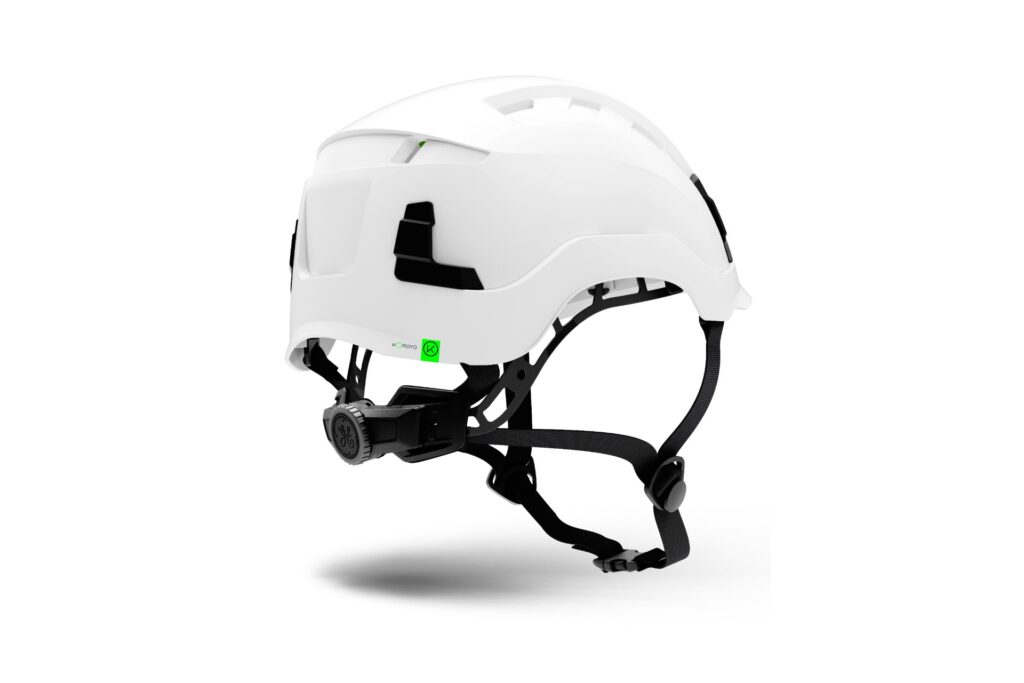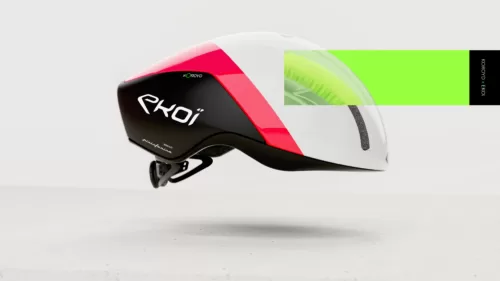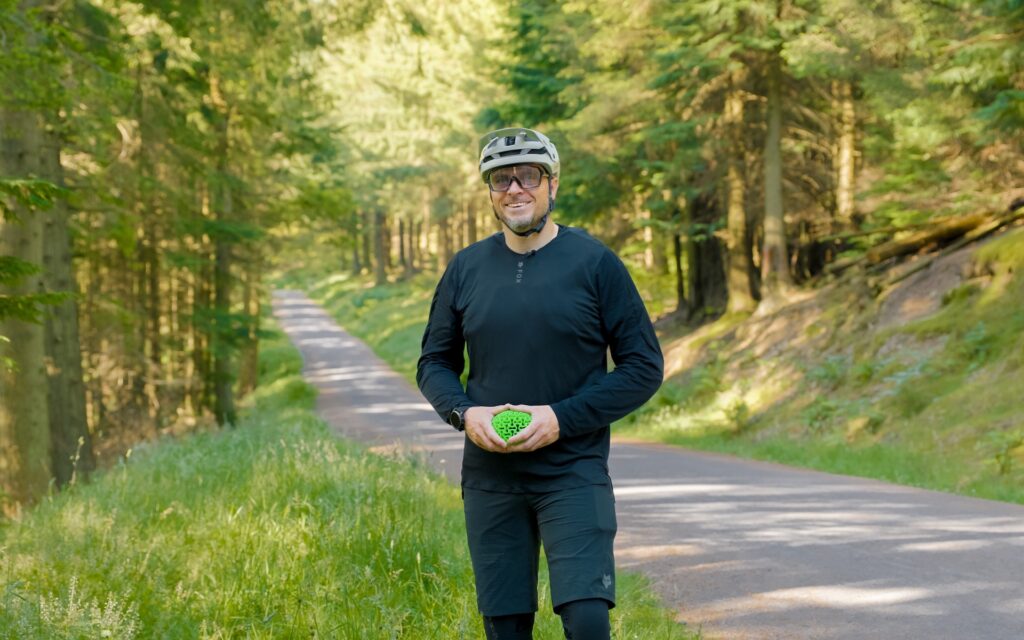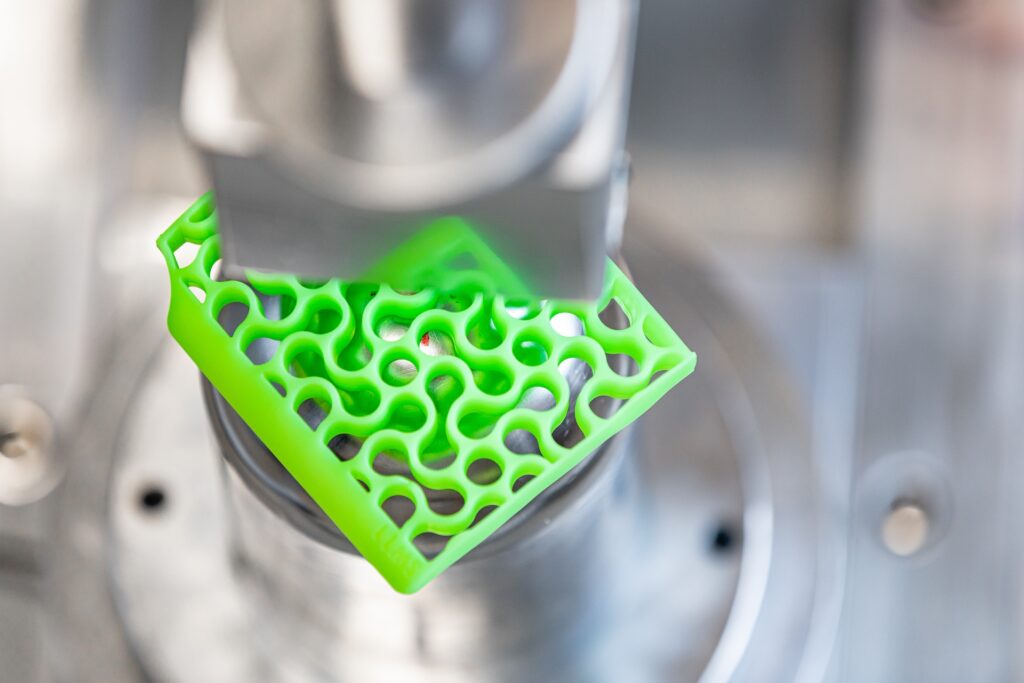
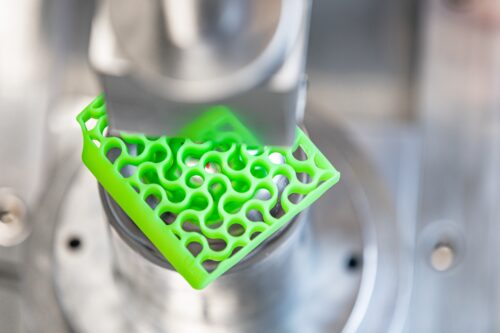
Bringing a protective product to market is an iterative, evidence-driven cycle that connects industrial design, material science, and manufacturing engineering. At KOROYD, this journey starts long before CAD models and test rigs. It begins with a question:
What performance problems are we looking to solve, and under what constraints?
Our approach is defined by partner requirements. In all cases, it remains an engineering approach – combining material science and geometric science to develop advanced impact protection technologies tailored to specific applications.
Different impact scenarios demand different energy absorption responses: low-velocity, high-velocity, single versus repeated impact. Each requires a different solution.
From the outset, the focus is on matching the material system and structural geometry to the energy profile being managed. That means selecting and tuning our technologies so they integrate effectively within the product architecture.
Whether the application is head, torso, limb, hand, or foot, the underlying challenge remains consistent: managing energy transfer in a controlled, predictable way, within tight constraints on volume, weight, airflow, comfort, and integration simplicity.
Defining the Problems to Solve
Every product begins with a set of performance requirements. In protection systems, these are often defined by standards (EN, CPSC, ASTM, etc.), but high-performance products aim beyond compliance.
From an engineering standpoint, this phase is about:
- Defining impact energy ranges and loading conditions
- Understanding use-case variability, including the types of impacts and environments in which the products are used
- Mapping protection zones across the body and their specific risk profiles
- Identifying constraints: weight, flexibility, ventilation, geometry, and manufacturability
KOROYD’s involvement starts here – not as a component supplier, but as a development partner. Technologies are selected and tuned based on the velocity and nature of the impact being managed, ensuring that the solution is aligned to the performance requirement from the outset.
Concept Sketching: Translating Requirements
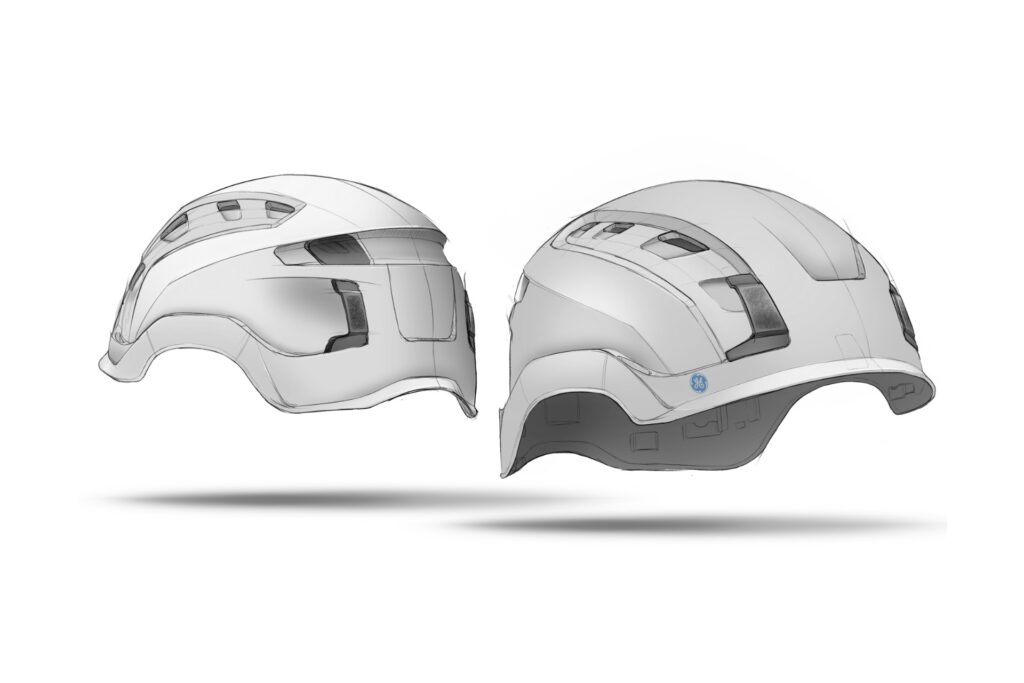
Industrial design sketches offer a functional hypothesis of what an end product might look like and how KOROYD will be integrated.
At this stage:
- Designers explore ergonomics, articulation, and integration with the human body
- Engineers evaluate load paths, coverage zones, and energy distribution
Early concepts often include:
- Zoned protection strategies tailored to anatomical risk areas
- Variable material and geometric configurations based on expected impact conditions
- Integration approaches – how the product will come together
KOROYD works alongside partner product teams to ensure that performance, comfort, and design intent are aligned from the beginning – not resolved later.
CAD Development: From Intent to Engineered System
Concepts move into CAD, where design intent becomes quantifiable and testable.
This phase includes:
- Parametric development of KOROYD technologies (geometry, spacing, material configurations)
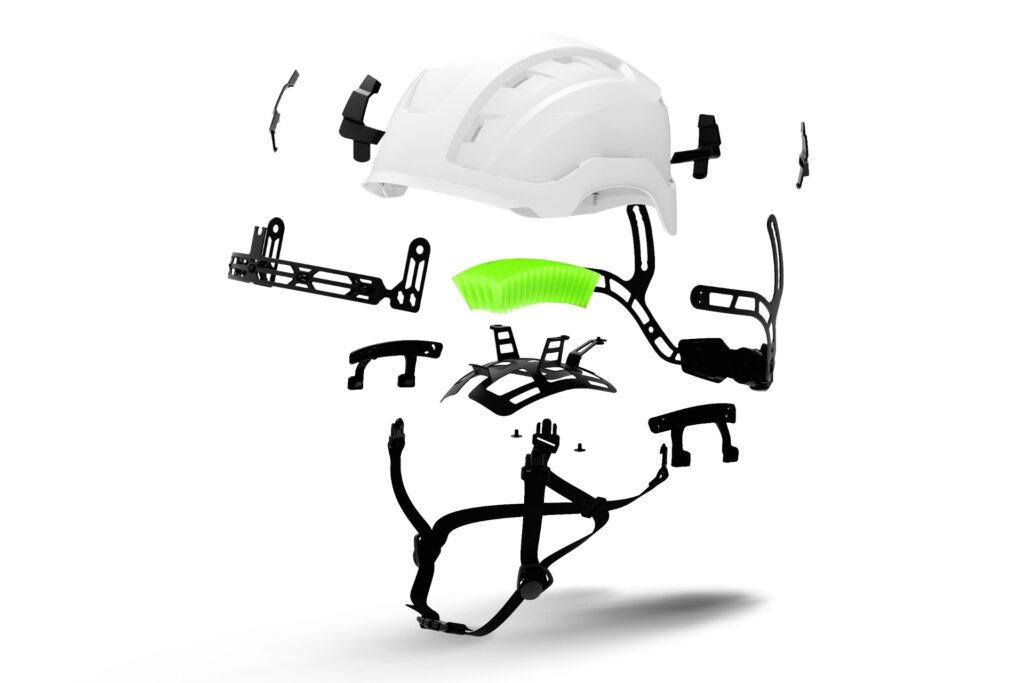
- Integration into full product architectures – shells, textiles, carriers, and structural frameworks
- Evaluation of deformation behaviour through simulation and analysis
KOROYD enables localised tuning across a product. Protection is engineered to reflect different impact scenarios across different parts of the body, adjusting both material response and structural geometry to match the expected impact conditions.
This system-level approach allows performance, weight, ventilation, and comfort to be resolved together, rather than traded against each other.
This enables what we define as protection without compromise – where increased protection does not come at the expense of comfort, usability, or design.
Simulation: Predicting Performance Before Prototyping
Between CAD development and physical prototyping, computational simulation can be used to evaluate performance under controlled conditions.
Using methods such as Finite Element Analysis (FEA), designs can be subjected to virtual impact scenarios that replicate real-world loading conditions:
- Different impact velocities and energy levels
- Multiple impact locations and angles
- Material and structural response under deformation
For KOROYD technologies, simulation provides early insight into how variations in geometry and material configuration influence energy management. Structural behaviour – such as deformation modes, stress distribution, and energy absorption – can be analysed before physical samples are produced.
Simulation is particularly valuable when developing systems across different applications. It allows rapid iteration of design variables and helps identify which configurations are best suited to specific velocity regimes and use cases.
However, simulation does not replace physical testing. It reduces development time, improves direction, and informs decision-making – but all models are ultimately validated through prototyping and real-world testing.
Prototyping: Physical Validation Across Systems
Digital development must be validated physically.
Prototyping progresses through:
- Geometry validation for fit, articulation, and integration
- Functional prototypes using production-representative KOROYD technologies
- Full system prototypes combining multiple materials and construction methods
For KOROYD, prototyping provides critical insight into:
- Real-world deformation and energy management behaviour
- Interaction between materials within the system
- Performance under repeated and multi-directional impacts
In wearable protection, factors such as movement, stability, and fit are evaluated alongside impact performance – because they directly influence real-world effectiveness.
Testing and Iteration: Data-Driven Refinement
Testing is an ongoing process.
Products are subjected to:
- Standardised impact testing relevant to the application
- Multi-impact and oblique scenarios where appropriate
- Environmental conditioning where appropriate (temperature, moisture, UV)
- Durability and fatigue testing
For KOROYD, testing focuses on:
- Energy absorption efficiency relative to weight and thickness
- Consistency of performance across different zones
- Behaviour after impact
Critically, testing confirms whether the selected technology is appropriate for the velocity regime it is intended to manage. If not, the system can be refined – geometry, material, or integration.
This approach is now being applied beyond traditional categories. Products such as FOX Racing’s Airframe body protection and Enduro knee guards demonstrate how KOROYD technologies can be tuned and integrated into flexible, wearable systems.
Design Freeze and Manufacturing Integration
Once performance targets are achieved, focus shifts to repeatability.
This involves:
- Finalising KOROYD technology specifications
- Ensuring compatibility with manufacturing processes
- Defining tolerances and quality control systems
KOROYD supports partners through this stage, ensuring that what is engineered can be manufactured consistently at scale – without loss of performance.
Production and Scale
Scaling introduces new constraints, but the objective remains unchanged: consistency.
KOROYD technologies are engineered for integration across a wide range of product types, from rigid assemblies to flexible systems.
Quality assurance includes:
- Batch validation
- Process monitoring
- Material and component traceability
Every unit must perform as intended. Engineering does not stop at design – it extends into production.
From Engineering to Communication
A high-performance product only delivers value if its benefits are clearly understood.
KOROYD supports brands at the point of sale by:
- Translating technical performance into clear communications
- Providing visual and physical tools to demonstrate performance advantages
- Ensuring consistency of communication across product categories
Because KOROYD technologies are visible and structurally distinct, they provide a direct and credible link between design and performance.
Beyond a Material
The journey from sketch to store is not about a single product or category. It is about developing protection systems that can be applied across multiple use cases.
KOROYD is not simply integrated into a product – it is developed as part of the product. From early concept through to production, it enables a system-level approach to protection.
This is what allows:
- Tuned energy management across different impact velocities
- Reduced weight without compromising protection
- Improved airflow and comfort
- Consistent, repeatable performance at scale
From concept through to production, KOROYD provides more than a material solution. It delivers the engineering capability to design, develop, and scale advanced protection systems.