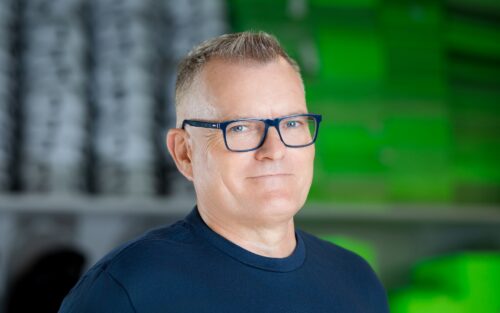

Meet adem belguiz, KOROYD’s research analyst
At KOROYD, developing better body protection starts with understanding more than just impact performance. It means looking at how materials behave, how structures move, and how protection feels when people actually wear it.
For Adem Belguiz, Research Analyst at KOROYD, this balance between material science and human-centred design is central to his work.
From testing and prototyping to numerical simulation, Adem explores how engineered structures can manage impact energy while supporting comfort, flexibility and freedom of movement.
As KOROYD continues to advance its Body Protection technology, we caught up with Adem to learn more about the research behind the materials, the development of the upcoming Level 2 range, and why sometimes less material can lead to better results.
How did your journey into research and analysis begin, and what eventually brought you to KOROYD?
“My path started in a classical French engineering track: two years of intensive classes préparatoires in Maths and Physics, followed by an engineering degree in materials and industrial processes.
My engineering school had extensive research facilities, especially in polymers and composites, where they conducted a lot of academic research. This led to an internship in Paris, where I studied aeronautical-grade composites.
Eventually, I knew I wanted to work in research and development, creating real-life products that could improve people’s lives.
KOROYD offered the perfect balance: the freedom to do research and analysis, work on a diverse range of projects and continue learning!”
What does your role as Research Analyst at KOROYD involve day to day?
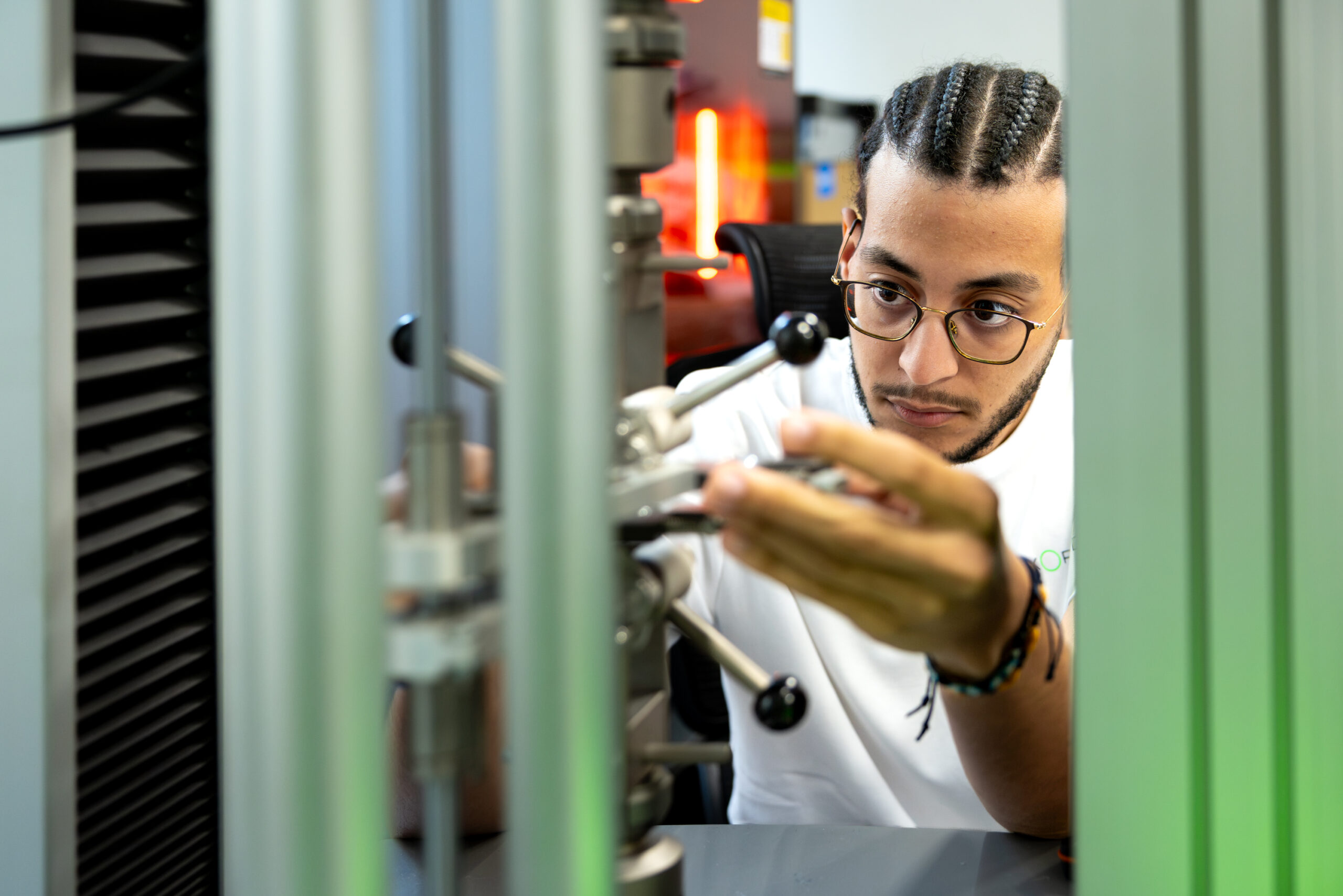
“I work on several projects related to body protection, focusing mainly on material innovation and the mechanical behaviour of the structures we develop.
This involves a lot of material testing and prototyping, and whenever I have some spare time, numerical modelling.”
How does research help KOROYD develop better protection technologies and products?
“At KOROYD, our approach is really grounded in prototyping and testing. We build real parts, test them and learn from the results. That ability to keep iterating is what drives product development.
Research helps us understand why a design performs the way it does and narrow down which ideas are worth prototyping next.
On paper, you can have really good energy absorbers, but they could also be horrible for the end user to wear. That’s why it’s so important to feel the product and test it in real-life conditions.”
What’s one interesting or unexpected thing you’ve discovered through your research at KOROYD?
“I think one of the most beautiful aspects of research is that many discoveries happen by accident, or simply by testing different ideas until you realise you’ve found the solution.
One day, you might think a design cannot be improved any further, and then you discover that you can actually remove a lot of material while keeping the same performance, or sometimes even improving it.
With energy absorbers, the amount of material isn’t necessarily what matters most. Physics allows you to absorb energy in different ways. The key is knowing how to work with it!”
Is there a project or piece of research at KOROYD that you’re particularly proud of?
“If I had to pick one, it would be the upcoming Level 2 range of body protectors.
I’ve been heavily involved in that project across the entire development process, from design definition and numerical modelling to prototyping.
Being able to contribute to every stage and see the development progress has made it especially rewarding.”
What are you focusing on at the moment, and what makes that work interesting to you?
“Right now, my main focus has shifted towards numerical simulation work, where I’m collaborating closely with the Mips team.
They bring a huge amount of knowledge to the table, and it’s been a great opportunity to learn from them since the acquisition.
Alongside that, I’m continuing to work on body protection development because keeping innovation moving and finding ways to make better products for end users really matters to me.”
Are there any trends or developments in impact protection and materials research that you think will become increasingly important?
“I think additive manufacturing will become increasingly important as the technology continues to improve.
Costs are coming down, and the time needed to print parts is also decreasing.
Additive manufacturing gives us the freedom to create parts that would have been impossible to produce using traditional methods such as injection moulding.
This opens up possibilities for new structures and energy absorbers that could be more efficient and more comfortable for the end user.”
What do you enjoy most about turning research and data into something the wider team can use?
“We usually start a project with a whole range of design ideas and materials to consider, and we need to narrow those options down so the team can make an informed decision.
Being able to take all that research and give the team something clear and understandable is genuinely a pleasure for me.”
What excites you most about the future of KOROYD and the work you’re doing here?
“Being part of KOROYD through the Mips acquisition has been really interesting.
It opens up bigger possibilities and more resources for the kind of simulation-driven materials work I care about.
They have extensive testing capabilities and great minds, and most importantly, they’re very open to collaboration!”
And away from research and KOROYD, what do you enjoy doing in your free time?
“Outside of work, I’m really into astronomy. I’ve got a telescope at home and love spending evenings looking up at the sky.
I’ve always been curious about the universe, and that curiosity is actually what got me into physics and science in the first place.”
Researching better protection, designed around people
At KOROYD, material innovation goes beyond understanding how a structure performs under impact. It is also about how that protection feels, moves and works with the person wearing it.
Adem’s work reflects this approach. Through research, testing and continuous development, he helps explore new ways to manage impact energy while reducing unnecessary material and improving wearability.
As KOROYD advances its Body Protection range, including the upcoming Level 2 solutions, this research-driven approach is helping develop protection that combines performance with comfort and freedom of movement.
Because better protection isn’t just about managing impacts. It’s about enabling people to move naturally, feel comfortable and perform at their best.